Things to Do in Cappadocia: A Complete Independent Traveler’s Guide 2026
By Alex Carter | Updated June 2026 | Researched on the ground in Cappadocia, staying in Göreme and Ürgüp across multiple seasons.
Cappadocia’s best experiences include hot air balloon flights at dawn, hiking through Rose and Red Valley, exploring the Byzantine frescoes at Göreme Open Air Museum, descending into the underground cities of Derinkuyu and Kaymaklı, sleeping in a genuine cave hotel, and participating in pottery workshops in Avanos. The region rewards early risers, boots with ankle support, and travelers who plan before they arrive.
You have three days in Cappadocia, two hundred hot air balloon photos saved to your camera roll, and almost no clarity on whether Ürgüp or Göreme is the right base. The region looks compact on a map, but the valleys are unmarked, and every blog insists you must ride a balloon without mentioning the price tag, the 4:00 AM wake-up, or the very real chance of cancellation.
Get the logistics wrong here and you will spend your mornings backtracking across a landscape that punishes poor planning. You will miss the Dark Church frescoes behind a tour-bus wall of bodies. You will pay tourist prices for a pottery demonstration in Göreme that was staged for Instagram. You will stand at the overcrowded Sunset Point wondering why the light looks better in everyone else’s photos.
This guide was built for independent travelers who need more than inspiration. Inside, you will find geographically logical, mix-and-match itinerary blocks that eliminate backtracking; real current costs for every activity; honest trail difficulty notes and trailhead logistics; and safety notes on balloon operator licensing, claustrophobia in underground cities, and which footwear will actually protect you on tuff rock.
By the end, you will know exactly where to sleep, how to move between valleys without a rental car, when to carry cash, and how to build a 1, 2, or 3-day itinerary that matches your pace. Start by identifying your base town below, then stack the modular day-blocks to fit your schedule.
“For a broader overview of the region’s climate, transportation networks, and seasonal requirements, see our comprehensive [Cappadocia Travel Guide 2026] to align your foundational trip planning.”
Cappadocia’s Landscape, Towns, and Timeline
The Volcanic Tuff: How Fairy Chimneys Were Formed
Roughly three million years ago, two volcanoes Erciyes and Hasan Dağı buried the central Anatolian plateau under deep layers of ash and lava. That ash compressed over millennia into a soft, porous rock called tuff. Harder basalt settled on top. Then wind and rain did the rest.
Because the basalt cap erodes at a slower rate than the tuff beneath, the rock weathers unevenly. Where a basalt cap survives, it protects a cone of softer tuff below the result is a fairy chimney, sometimes balanced improbably with a dark capstone on a pale column dozens of meters tall. Where the cap has eroded entirely, the tuff is sculpted into the ridgelines and valley walls you walk through.
This matters practically. The terrain is not hard granite or sandstone. Tuff is light, brittle in places, and behaves differently underfoot after rain more on this in the hiking section.
The Five Key Towns at a Glance
| Town | Character | Best For |
|---|---|---|
| Göreme | Tourism hub; immediate trail and balloon access | First-time visitors, hikers, photographers |
| Ürgüp | Upscale dining, quieter evenings, luxury cave hotels | Couples, food-focused travelers |
| Uçhisar | Highest point; fortress castle; panoramic position | Sunrise photographers, rental-car travelers |
| Avanos | Pottery town on the Kızılırmak River | Pottery workshops, testi kebab, riverside atmosphere |
| Ortahisar | Rock-cut castle; local neighborhood feel; lower prices | Budget travelers wanting a quieter base |
A Brief History of Cave-Dwelling Civilizations
The tunnels and carved churches across Cappadocia span roughly three thousand years of use. Hittite settlements preceded the Christian communities here, but the rock-cut architecture most visitors explore today dates primarily from the Byzantine monastic period between the 6th and 13th centuries.
The underground cities were not permanent homes they were refuge systems. Early Christian communities fleeing Roman persecution carved chambers into the soft tuff with enough depth and complexity to sustain thousands of people for weeks at a time, including ventilation shafts, water wells, storage rooms, and livestock stalls. The Seljuk and Ottoman periods added further layers: caravanserais, mosques, and the distinctive Anatolian architectural vocabulary that sits alongside the older carved churches throughout the region.
Where to Stay: Matching Your Base to Your Travel Style
The short answer: stay in Göreme if you want to walk to trailheads and balloon launch points. Stay in Ürgüp if you want better dining and quieter nights. Use Ortahisar if you need to cut accommodation costs without sacrificing location entirely.
Göreme: Immediate Trail and Balloon Launch Access
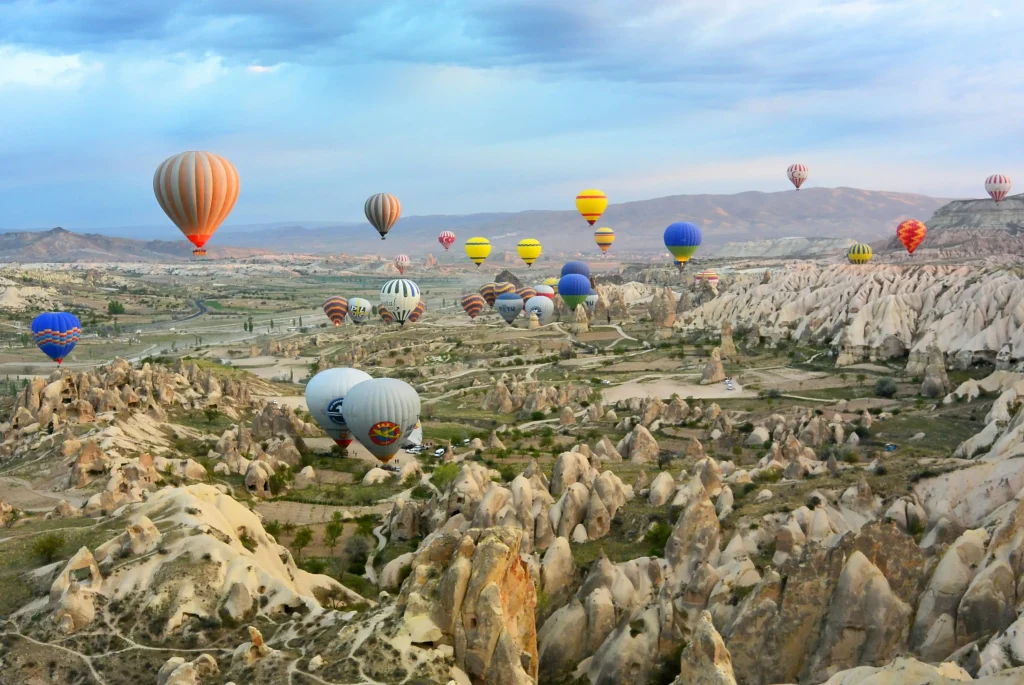
Göreme is the obvious choice for first-time visitors, hikers, and photographers who want to walk to trailheads without arranging transport every morning. The Open Air Museum is a ten-minute walk. Rose Valley trailhead is accessible on foot. Balloon operators depart from the fields just outside town.
The trade-offs are real. Göreme has the highest noise levels of the five towns, particularly around the central square on summer evenings, and proximity to balloons and trails means premium pricing. Cave hotel authenticity also varies significantly many properties have applied decorative tuff paneling to concrete rooms. Before booking, look for poured concrete corners in listing photos. Genuine rock-carved rooms show irregular ceiling and wall textures throughout, not just on one feature wall.
Ürgüp: Upscale Amenities and Quieter Evenings
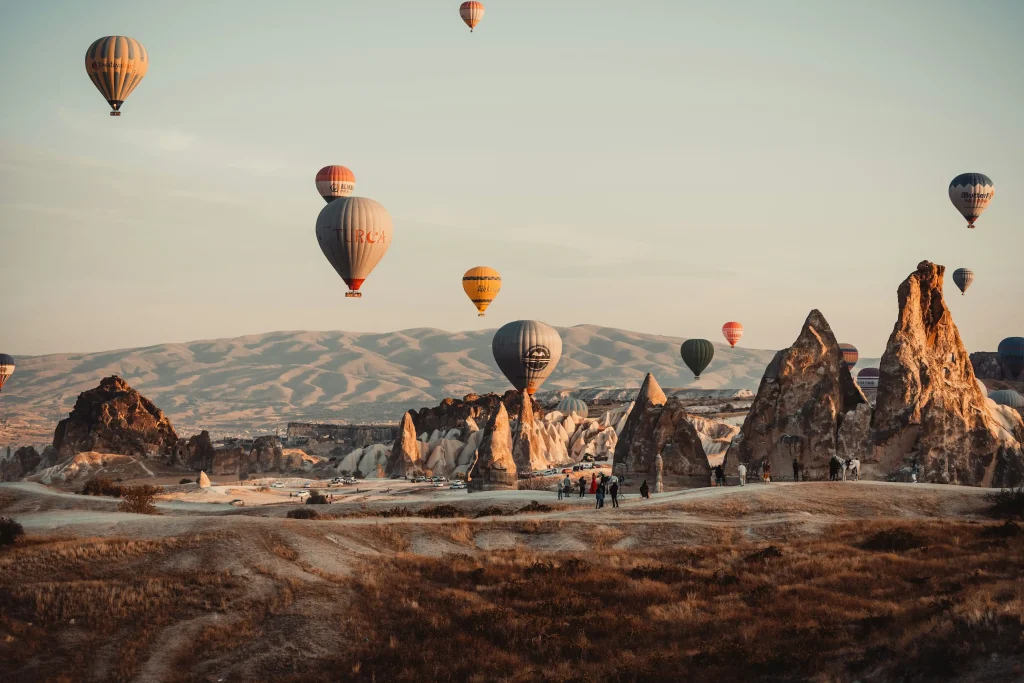
Ürgüp suits couples, food-focused travelers, and anyone prioritizing comfort over raw trail proximity. The dining scene here is meaningfully better than Göreme regional wine lists are longer, restaurants take more care with presentation, and the evening atmosphere is calmer. Luxury cave hotels in Ürgüp tend to be more reliably authentic, as the town has maintained tighter property standards for registered heritage buildings.
The practical downside is distance. Trailheads require a taxi or dolmuş ride, and balloon launch points are a longer transfer from here. If you want to hike the valleys every morning before breakfast, Göreme is the right call. If you are willing to arrange a ten-minute taxi for trail access in exchange for a significantly better dinner and quieter nights, Ürgüp earns that trade.
Uçhisar, Ortahisar, and Avanos: When to Choose an Alternative
Uçhisar makes sense for travelers with a rental car who prioritize sunrise viewpoints and photography. The castle sits at the highest point in Cappadocia and provides the classic wide-angle view of balloon fleets ascending at dawn. Without a car, Uçhisar feels isolated.
Ortahisar offers the closest thing to a local neighborhood base. Prices for equivalent rooms run 20–30% lower than Göreme, and the tourist infrastructure is thin enough that you will eat in restaurants where the clientele is mostly Turkish. For budget-conscious travelers who don’t mind arranging transport for each activity, this is a legitimate choice.
Avanos is a single-purpose detour town. The pottery workshops, the Kızılırmak River setting, and the testi kebab restaurants are the draw. Staying overnight makes sense only if you are genuinely spending a full day in the town.
The Six Core Experiences in Detail
Hot Air Balloons: Booking, Weather, and Operator Vetting
Important Pricing Notice: Ticket prices, museum fees, and balloon flight rates are subject to seasonal adjustments by local operators and heritage authorities. We highly recommend checking the official booking platforms or live affiliate widgets at the exact time of your travel to lock in current rates.
Alex’s Travel Journal: During my first morning scouting the region, the wind limits spiked at dawn, grounding every single basket. Because I hadn’t booked a strategic backup morning in advance, I spent the next three hours frantically messaging local operators via WhatsApp only to find out everything was completely oversold for days. It was a brutal lesson in Cappadocia logistics. Always book for your first morning.
Balloon flights operate under the strict oversight of Turkey’s Civil Aviation Authority (SHGM), which uses a flag system to approve or cancel flights each morning based on real-time wind speed and weather data. All pilots and balloons must be licensed, with regular examinations required.
- What to expect on flight morning: You will receive a hotel pickup somewhere between 4:00 and 5:00 AM. A light breakfast is served at the launch site while crews inflate the envelope. The flight itself lasts approximately one hour, reaching altitudes around 1,000 meters, and ends with a landing celebration and flight certificate. Dress in layers dawn temperatures at altitude are meaningfully colder than afternoon readings in town.
- Identifying a licensed operator: Before paying a deposit, confirm that the operator holds an SHGM Air Operator Certificate (AOC). Ask for the certificate number via WhatsApp before booking. Red flags include pressure to pay cash upfront with no written confirmation, no cancellation policy on their website, and pricing that sits unusually low for basket size.
- Pricing Structure: Standard shared group flights (20–28 passengers) typically start from €150 to €220 per person. Comfort and premium packages with smaller baskets (12–16 passengers) range from €180 to €280 per person. Private charters run upwards of €2,000 total per basket depending heavily on seasonal peak demand. Prices surge during autumn peak (September–October) and hit lower baselines January through March, though cancellation rates in winter are significantly higher.
- Strategy: Book your balloon for the first morning of your trip. Weather cancellations are frequent; scheduling the ride on day one gives you buffer days to reschedule without missing out entirely. For booking platforms, GetYourGuide and Viator both offer free cancellation options and consumer protection.
Göreme Open Air Museum and the Lesser Rock-Cut Churches
- Key facts: General admission entry fee starts around €20 per person, with an additional €6 for the Dark Church. Open daily from 08:00. Arrive by 08:00 to beat tour buses that arrive by 09:30. Bring a layer for covered shoulders.
- The Experience: The Open Air Museum is the densest concentration of Byzantine rock-cut churches and monastic dwellings in Cappadocia, compressed into a walkable area that most visitors can cover in two to three hours. Arrive at 8:00 AM sharp early entry gives you 90 minutes of peaceful viewing before the main crowd arrives, and the morning light through the carved apertures is better for photography.
- Don’t skip Tokalı Kilise: Do not exit through the main gate without crossing the road to visit Tokalı Kilise. It sits directly opposite the museum entrance and is included in your ticket. Most visitors miss it. The frescoes here feature a distinctive deep blue background and narrate the life of Christ in greater detail than any church inside the main complex.
- The Dark Church: Access requires the additional separate ticket and prohibits all interior photography. This preservation fee is the exact reason these vibrant 11th-century biblical frescoes survived completely un-retouched.
Underground Cities: Derinkuyu and Kaymaklı
- The Selection: Derinkuyu descends 8 floors to approximately 60–85 meters deeper, more dramatic, and better for the “wow factor.” Kaymaklı is shallower with wider corridors across four open levels and marginally easier for mild claustrophobia. Entry to each starts around €13. Allow 1.5–2 hours per site. Neither is suitable for severe claustrophobia.
- Timings & Passes: Derinkuyu is open daily from 08:00 to 17:00, with ticket sales ending at 16:15. The regional digital passes cover entry at both sites.
- Honest claustrophobia advisory: The narrowest passages in Derinkuyu run approximately 60–70cm wide and require bending at the waist and moving single-file for sections of 20–30 meters. There is no shortcut through these passages. If you have serious claustrophobia, Kaymaklı’s upper two floors are accessible without entering the tightest passages and offer a fair sense of the site without the full descent.
- Physical requirements: Sturdy, closed-toe footwear is essential. Stairs in places are steep and uneven, and the temperature inside both cities drops noticeably below the surface (hovering around 18°C). Bring a light jacket regardless of the outdoor temperature.
Valley Hiking: Rose, Red, Pigeon, and Ihlara
- The Bottom Line: Wear proper hiking boots with ankle support not light sneakers. Tuff rock is deceptively slippery and brittle. For the best golden-hour light, hike Red Valley instead of going to the overcrowded Göreme Sunset Point. Allocate a full day for Ihlara Valley do not combine it with underground cities into a rushed half-day.
| Valley | Difficulty | Duration | Best Time | Notes |
|---|---|---|---|---|
| Pigeon Valley | Easy | 1.5 hrs one way | Morning | Connects Göreme and Uçhisar; well-marked |
| Rose Valley | Moderate | 2–3 hrs circuit | Late afternoon | Best valley for golden-hour color; quiet |
| Red Valley | Moderate | 1.5–2 hrs | Late afternoon | Superior sunset to Göreme’s Sunset Point; turns deep crimson |
| Ihlara Valley | Strenuous | 5–7 hrs full circuit | Full day | 14km gorge; rock-cut churches en route |
- Hydration: Carry enough water. On summer days above 30°C, plan your schedule around an early start trail conditions in July and August are genuinely dangerous after 11:00 AM due to the lack of shade. Plan for 500ml per hour of hiking as a minimum.
- Navigation: For navigation in signal-dead zones, download Maps.me or AllTrails offline before leaving your hotel. Several valley trailheads are unmarked and the network of paths forks in ways that are disorienting without a digital reference.
Sleeping in a Cave Hotel
- What to know upfront: At the budget end, cave hostels in Göreme offer dormitory rooms for €25–€35 per night. Mid-range properties run €80–€160 per night and vary enormously in authentic build quality. Luxury boutique properties in Ürgüp and Uçhisar in the €250–€450 range are more consistently authentic, largely because heritage building regulations are stricter.
- Authenticity Filter: Authentic rock-carved rooms show irregular textures throughout not just on one decorative feature wall. Mid-range properties in Göreme vary enormously in authenticity; Ürgüp tends to be more consistently genuine at the luxury end.
- Red flags in reviews: Look out for mentions of noise through the walls (indicating thin or non-rock drywall partitions), complaints about heating in winter (poorly insulated concrete-core buildings), and descriptions of “cave-style” rather than “cave room” in the property’s own listing language.
Avanos Pottery and Traditional Workshops
- Quick guide: A legitimate hands-on pottery session costs €15–€30 for 45–60 minutes. Look for Ministry of Culture artisan registration certificates to distinguish working studios from staged showrooms. A working pottery studio has wheels with visible wear, clay residue on the floor, and kilns in active use.
- Where to Eat: Eat testi kebab in Avanos, not Göreme. This pottery-sealed regional specialty is cooked in a sealed clay vessel over an open fire and cracked tableside. In Göreme, most restaurants serve a speed-adapted version. In Avanos, the technique is done properly. Budget around €15–€25 per person at a mid-range Avanos restaurant.
Cappadocia Without the Balloon
The direct case: you do not need a balloon to see Cappadocia properly. You need a headlamp, boots with ankle support, and the discipline to leave your hotel before dawn. The best light and solitude in the valleys happen during the same window when everyone else is paying a premium to look down at the landscape from above.
The geological spectacle is ground-level as much as it is aerial. What a balloon offers is a specific wide-angle view over the chimney field at dawn. What it does not offer is intimacy with the landscape. That happens on foot.
Alternative Sunrise Viewpoints and Exact Timings
- Uçhisar Castle: The most practical alternative. Entry runs approximately €5–€8, and the view from the top encompasses the same balloon fleet that fills the sky at dawn, with the Göreme valley spread below. Arrive 30–40 minutes before local sunrise roughly 5:30 AM in June, 7:00 AM in January.
- Hotel rooftops: These work well if your property has an unobstructed eastern orientation. Ask directly when booking some Göreme cave hotels have rooftop terraces that offer a clear sky view with no ticket required.
Ground-Level Balloon Spotting
The launch fields outside Göreme provide a wide-angle view of the entire balloon fleet ascending simultaneously. Position yourself on the elevated ground east of the town center before first light. Crews begin inflating around 4:30–5:00 AM, and the fleet is typically airborne by 6:00–6:30 AM. No ticket or reservation is required.
Premium Hiking Rewards for Non-Fliers
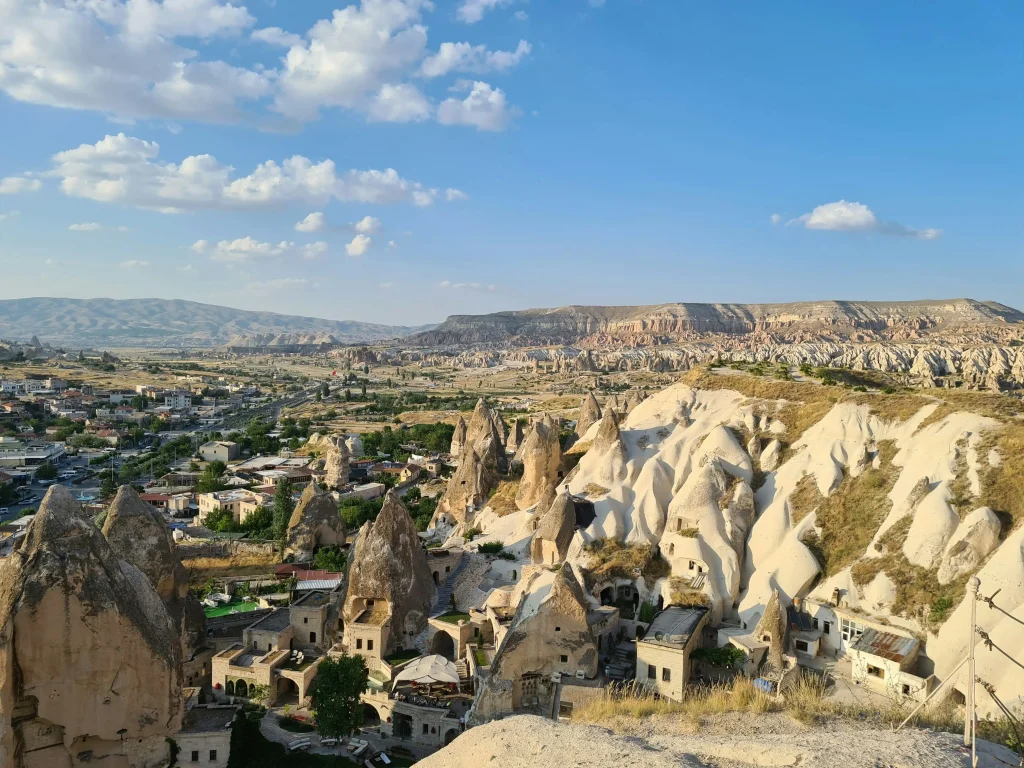
The best light in Rose Valley happens during the same 45-minute window when balloons are in the air. While tourists are in the sky, you can be inside the valley, walking through tuff corridors colored deep rose and ochre in the dawn light, with almost no one else around. For precise golden-hour calculations at specific GPS trailhead coordinates, Sun Surveyor and PhotoPills both offer minute-by-minute light quality data for any location.
Getting There and Getting Around
Flights vs. Buses from Istanbul and Ankara
Cappadocia is served by two airports: Kayseri Erkilet (ASR) and Nevşehir Kapadokya (NAV). Kayseri is larger, with more flight options from Istanbul on Turkish Airlines, Pegasus, and SunExpress it’s about 75 minutes from Göreme by airport shuttle. Nevşehir (NAV) is closer at 40 minutes but has fewer routes. An overnight bus from Istanbul takes 10–11 hours and saves a night’s accommodation cost. For comparing live schedules across flight, bus, and combined rail, Rome2Rio handles multi-modal routing reliably.
Rental Car, Scooter, and Taxi Tactics
A rental car is essential for the southern circuit Ihlara Valley, Derinkuyu, and Selime Monastery are spread across a distance that makes taxi costs accumulate quickly. For the northern circuit centered on Göreme and Ürgüp, a car creates more parking friction than it solves.
There is no ridesharing infrastructure like Uber in Cappadocia. Agree on a round-trip price with your taxi driver before heading to remote sites like Derinkuyu or Selime Monastery negotiate the full day rate rather than one-way fares.
Inter-Town Transport and Trailhead Access
Dolmuş (shared minibus) services run between Göreme, Ürgüp, Avanos, and Nevşehir on schedules that work for most daytime movement. Frequency drops significantly after 6:00 PM. Fares run €1–€3 per journey.
The distances on Cappadocia’s map are deceptive. Two points visible from a hilltop are often a 20-minute drive apart by road due to valley geography. Do not plan to walk between Göreme and Ürgüp as part of a packed day itinerary.
Mix-and-Match Itinerary Frameworks
These three day-blocks are designed to be stacked in any combination. Each block is geographically grouped to eliminate backtracking.
Block A: Essential Culture and Visuals (1 Day)
- Morning: Göreme Open Air Museum, arriving at 8:00 AM for pre-crowd access. Allow 2–3 hours, including the Dark Church. Cross the road to Tokalı Kilise before leaving.
- Afternoon: Dolmuş to Avanos for a pottery workshop session, followed by a authentic testi kebab lunch at a family-run Avanos restaurant.
- Evening: Return via Çavuşin to hike the Red Valley trailhead for golden-hour light. Taxi or dolmuş back to your base from Çavuşin.
Block B: Adventure and Deep History (1 Day)
- Morning: Hot air balloon flight at dawn, or alternative sunrise viewpoint at Uçhisar Castle.
- Late morning: Underground city either Derinkuyu or Kaymaklı. Allow 1.5–2 hours including the drive.
- Afternoon: Rose Valley or Pigeon Valley hiking loop. Pigeon Valley from Göreme to Uçhisar works well as a one-way hike with a dolmuş return.
Block C: Southern Circuit Immersion (1 Day)
This block requires a rental car or negotiated all-day taxi.
- Morning: Ihlara Valley trailhead. Enter by 8:30 AM and hike through to the midpoint café at Belisırma for a riverside tea break.
- Early afternoon: Selime Monastery a massive rock-cut cathedral complex carved into a cliff face. Allow 45–60 minutes.
- Late afternoon: Derinkuyu Underground City before closing at 17:00.
- Note: Carry a packed lunch and cash. The Ihlara tea gardens along the valley floor are strictly cash-only.
Combining Blocks: Sample Sequences
- A two-day visit works best as Block A plus Block C cultural sites, artisan town, valley hiking, and the southern circuit without a rushed pace.
- A three-day visit: Block A on day one, Block B on day two (book the balloon for day two morning after confirming weather the evening before), Block C on day three. If balloon weather cancels day two, the block easily swaps with a Pigeon Valley hike and Uçhisar Castle morning same geographic area, no rescheduling friction.
Season by Season: What to Expect and When to Go
Best time to visit Cappadocia overall is Autumn (September–October) for the highest balloon reliability, optimal photography light, and rich landscape colors but book accommodation 2–3 months ahead. Spring (April–May) offers the best balance of cost and conditions for most independent travelers.
| Season | Weather | Balloon Success | Crowd Density | Avg. Hotel Rates | Best For | Key Considerations |
|---|---|---|---|---|---|---|
| Spring (Apr–May) | Mild days, cool mornings, occasional rain | ~75% | Moderate | Mid-range | Hiking, wildflowers, comfortable temperatures | Pack layers; dawn starts are cold; trails can be muddy after rain |
| Summer (Jun–Aug) | Hot and dry; midday regularly exceeds 30°C | ~65% | High | Peak pricing | Early-morning activities, long daylight hours | Dehydration risk on trails; prioritize 6 AM starts; book balloons weeks ahead |
| Autumn (Sep–Oct) | Stable, warm days; crisp mornings | ~90% | Very High | Premium | Photography, balloon reliability, harvest light | Book accommodation 2–3 months ahead; optimal golden-hour conditions |
| Winter (Nov–Mar) | Cold with snow possible, especially January | ~45% | Low | Lowest rates | Budget travelers, snow landscapes, solitude | Frequent balloon cancellations; some trails icy; verify hotel heating systems |
Real Costs and Cash Tactics for a Volatile Economy
The one-line version: carry cash Lira for anything outside the main towns. ATMs are reliable in Göreme and Ürgüp but scarce in valleys and remote sites. Because exchange rates shift, treat local numbers dynamically and use an updated currency app before any major transaction.
2026 Cost Index Matrix
| Category | Budget | Mid-Range | Upscale |
|---|---|---|---|
| Accommodation (per night) | €25–€45 (cave hostel or basic room) | €80–€160 (standard cave hotel) | €250–€450 (luxury boutique suite) |
| Meals | €5–€8 (lokanta or street food) | €15–€25 (restaurant with wine) | €35–€60 (tasting menu, fine dining in Ürgüp) |
| Hot air balloon | €150–€200 (standard group) | €180–€280 (comfort/small basket) | €2,000+ (private charters) |
| Göreme Open Air Museum | €20 (main) + €6 (Dark Church) | — | — |
| Underground city (per site) | ~€13 per person | — | — |
| Ihlara Valley entry | ~€15 | — | — |
| Pottery workshop | €15–€20 | €25–€30 | — |
| Taxi (Göreme to Derinkuyu, RT) | ~€50–€70 negotiated | — | — |
| Dolmuş fare | €1–€3 per journey | — | — |
Money-Saving Tactics
Booking directly with cave hotels saves platform commissions, and owners are often willing to negotiate on multi-night stays. For the southern circuit, a shared taxi negotiated with other independent travelers at your hotel is consistently cheaper than joining a standard group tour.
The country-wide Museum Pass Turkey covers entry to the Göreme Open Air Museum, both underground cities, and several other sites. If your itinerary hits three or more major paid attractions, buying the digital multi-site pass generally pays for itself on a three-day itinerary.
Meeting the Makers: Local Artisan Spotlights
Avanos Pottery Masters
Avanos has operated as a center of ceramic production since the Hittite period. The red clay from the Kızılırmak riverbed is the defining material. The town’s central district has working studios alongside showrooms. Studios that display a Ministry of Culture artisan registration certificate or a local craftsmen’s cooperative membership plaque are operating under strict traditional standards.
Family-Run Cave Hotel Owners
The economics of a legitimate cave hotel are more demanding than they appear. Maintaining a tuff-rock property requires specialized stone masons, renovation permits requiring cultural heritage approval, and complex heating systems. Asking your host about the original excavation date of your room and which parts of the property are original versus restored often rewards you with unmatched context.
Traditional Carpet Weavers
Co-operative workshops, often affiliated with the Turkish Cooperative of Village Handcrafts, operate at fixed price standards with transparent certification. High-pressure sales floors on tourist routes in Göreme and Ürgüp operate on heavy commission. A fair price benchmark for hand-spun wool kilims of moderate size (approximately 100x150cm) from a legitimate cooperative runs €150–€400 depending on knot density and age, while silk variants start around €300.
Safety, Etiquette, and Honest Risks
Balloon Operator Certification Checks
Before paying any deposit, confirm the operator’s SHGM AOC certificate number. Ask via WhatsApp before booking. Commercial aviation insurance is mandatory SHGM requires all licensed operators to carry passenger liability insurance covering at minimum 250,000 EUR per passenger. Operators advertising suspiciously low prices may be operating with inadequate coverage.
Trail Difficulty, Heat, and Dehydration Warnings
Summer hiking in Cappadocia above 30°C is genuinely risky if you start after 10:00 AM. The valleys provide almost no shade, tuff walls radiate heat in afternoon sun, and the combination of physical exertion can produce heat exhaustion quickly. Start before 7:00 AM and be off exposed trails by 11:00 AM. After significant rain, tuff rock becomes noticeably slicker.
Underground City Claustrophobia Advisories
The narrowest passages in Derinkuyu run approximately 60–70cm wide with ceilings low enough to require bending forward. These passages are unavoidable on the main route. It is not recommended for individuals with back problems, cardiac conditions, or severe claustrophobia. Children under 5 are generally not suitable for deep underground city visits.
Local Etiquette, Tipping, and Appropriate Dress
Active rock-cut churches require covered knees and shoulders. Tipping culture: restaurants expect roughly 10% in tourist-oriented establishments. Private drivers and guides: approximately TRY 100–200 per day is standard. Download Google Translate with the Turkish offline pack before arrival. In medical emergencies, Nevşehir State Hospital is the nearest full-service facility; the emergency number is 112.
Essential Gear and Digital Tools
What you actually need:
- Hiking boots with ankle grip (Tuff rock is brittle and deceptively slippery).
- A 10,000mAh power bank (Cold morning temperatures reduce phone battery life).
- Offline maps (Maps.me or AllTrails) downloaded before you leave the hotel.
- Cash Lira for remote sites and valley floor tea gardens.
- A light jacket for balloon mornings and underground temperatures.
Local SIM cards are available from Turkcell and Vodafone Turkey at Kayseri and Nevşehir airports. A standard tourist SIM with 10GB data runs approximately €15–€20. eSIM options from providers like Airalo or Holafly also work reliably across the plateau.
Frequently Asked Questions About Cappadocia
How many days do you need in Cappadocia?
Three days is the practical minimum for covering the main experiences without rushing one day for the Open Air Museum and Avanos, one for the balloon and a valley hike, and one for the southern circuit including Ihlara and Derinkuyu. Four to five days allows for pacing and the flexibility to reschedule a balloon cancellation without stress.
What is the best time of year to visit Cappadocia?
Autumn (September and October) delivers the highest balloon success rate at around 90%, the richest golden-hour photography light, and the most stable weather. Spring (April–May) is the best alternative wildflowers, solid balloon conditions, and lower hotel rates than autumn.
How much does a hot air balloon ride in Cappadocia cost?
Standard shared group flights (20–28 passengers) typically start from €150 to €220 per person. Comfort and premium packages with smaller baskets range from €180 to €280 per person. Prices are higher during autumn peak season and can fluctuate day to day based on demand.
Should I stay in Göreme or Ürgüp?
Göreme is the better choice for first-time visitors, hikers, and photographers you can walk to trailheads and balloon launch points from the town center. Ürgüp is better for couples and food-focused travelers who want a quieter base with stronger dining options. The trade-off is simple: Göreme gives you physical proximity, Ürgüp gives you quality of experience after the day’s activities end.
Can you visit Cappadocia without taking a balloon ride?
Yes, and the ground-level experience is genuinely compelling on its own. Rose Valley and Red Valley at golden hour, the Göreme Open Air Museum frescoes, the Derinkuyu underground city descent, and a full day on the Ihlara Valley trail are all experiences that stand independently. Alternatives to the balloon for sunrise viewing include Uçhisar Castle (€5–€8 entry) and hotel rooftop terraces.