
Is Cappadocia Safe? A Complete 2026 Safety Guide for Travelers
Is Cappadocia Safe? The Quick Answer
Yes, Cappadocia is one of the safest regions in Turkey for tourists. Crime against visitors is rare, the local economy runs almost entirely on tourism, and the towns most people visit, Göreme, Uçhisar, Avanos, and Ürgüp, are small, walkable, and used to welcoming foreigners every single day of the year.
The two things people actually worry about, hot air balloon safety and Turkey’s proximity to conflict zones, are both easy to put into context once you look at the real numbers. We’ll walk through every one of them below, along with a few things most guides don’t bother mentioning.
Quick facts:
- Turkey is currently rated Level 2 (Exercise Increased Caution) by the US State Department, the same tier as France, Germany, or the UK
- Cappadocia sits roughly 475 km from the Syrian border, about a five hours drive
- Cappadocia’s balloon safety record sits above 99.9%, based on flight data going back to 1996
- Petty theft, not violent crime, is the main practical risk, and it’s uncommon even by that standard
Is It Safe to Travel to Cappadocia Right Now in 2026?
As of mid 2026, yes. Cappadocia continues to operate as normal, with balloon flights launching most mornings, hotels running at healthy occupancy, and the usual flow of tourists through Göreme’s cave hotels and valley trails.
Turkey’s southeastern provinces, areas like Şanlıurfa, Diyarbakır, and Hatay, do carry higher risk ratings and appear on official advisories, but they’re a full day’s drive from Cappadocia and outside any normal tourist itinerary. Nothing about the situation there changes daily life in Nevşehir province.
If you want a habit worth building before any international trip, check your government’s official travel advisory the week before you fly, not months in advance. Conditions along Turkey’s borders shift occasionally, and a five minutes check gives you current, not outdated, information.
Are Hot Air Balloon Rides Safe in Cappadocia?
Hot air ballooning is Cappadocia’s signature experience, and it’s also the question every safety-conscious traveler asks first. The honest answer is that it’s remarkably safe, more so than most people assume once they see the actual numbers.
Cappadocia hosts around 150 balloons on a typical flying morning, with roughly 200 to 250 flyable days a year. That works out to somewhere near 37,500 flights annually. Since 1996, the region has recorded only nine serious accidents across close to a million total flights, putting the incident rate below 0.01%. Pilots are required to hold Turkish Civil Aviation licenses, undergo regular recertification, and check weather conditions before every single flight. If wind speeds exceed safe limits, usually anything over 10 to 12 mph, flights are cancelled outright rather than risked.
Choosing a Licensed Balloon Operator
Not every company advertising balloon rides online is equally careful, so it’s worth spending two minutes verifying before you book.
- Confirm the operator holds a current Turkish Directorate General of Civil Aviation (SHGM) license, reputable companies list this openly
- Ask how many years of flying experience the pilot has. Operators with pilots holding 10+ years of experience consistently show better safety records
- Read recent reviews (last 6 to 12 months) rather than a company’s all time rating, since staff and safety culture can change
- Avoid the very cheapest options. Balloon pricing in Cappadocia sits in a fairly narrow band, and prices well below that range are usually cutting corners somewhere
But during all my visits, I have totally relayed on Royal Balloon because its trusted, affordable and premium too.
What Happened in Past Incidents
It wouldn’t be honest to write a safety guide and pretend nothing has ever gone wrong. On October 18, 2022, a balloon carrying 28 passengers made a hard landing near Avanos after a sudden increase in wind speed. Two Spanish tourists lost their lives, and three others were injured. It’s the most serious Cappadocia balloon incident in recent years and the kind of story that understandably makes people nervous before booking.
What that incident actually changed is worth knowing too. In the aftermath, Turkish aviation authorities tightened pre-flight weather assessment protocols and increased scrutiny of operators’ wind-speed decision making. Serious accidents in Cappadocia remain genuinely rare precisely because incidents like this one get investigated and acted on, not buried. If you’re still uneasy, flying with an experienced operator and accepting a cancellation on a windy morning rather than pushing ahead is the single best thing you can do.
Is Cappadocia Safe from Earthquakes?
Turkey sits on active fault lines, and the devastating 2023 earthquakes centered around Kahramanmaraş understandably left a lot of travelers asking whether Cappadocia carries similar risk.
The short answer is that Cappadocia is considerably less exposed than the regions affected in 2023. Nevşehir province sits further from the country’s most seismically active fault systems, and while no part of Turkey is entirely earthquake free, Cappadocia has not experienced significant seismic damage in recent history. Local buildings, including the region’s famous cave hotels carved into volcanic rock, have generally proven structurally stable, since the tuff stone they’re built from tends to absorb ground movement well.
Basic earthquake preparedness is sensible anywhere in Turkey. Know your hotel’s emergency exits, keep a charged phone and any medication accessible overnight, and follow local instructions if anything does happen. But there’s no reason to avoid Cappadocia specifically over earthquake risk.
Is Cappadocia Safe for Solo Female Travelers?
Cappadocia is consistently rated by solo female travelers as one of the more comfortable regions in Turkey to explore alone. The towns are small, tourism dependent, and used to independent travelers of every kind. Locals working in hotels, restaurants, and tour companies deal with solo visitors constantly, and unwanted attention is uncommon, particularly compared to larger Turkish cities.
That doesn’t mean switching off common sense. Basic precautions matter here the same way they would in any unfamiliar destination.
Solo Female Traveler Safety Tips
- Book accommodation with recent reviews from other solo female travelers, cave hotels in Göreme and Uçhisar are generally well reviewed for this
- Arrange balloon pickups and late tours through your hotel rather than street vendors
- Dress is casual and relaxed in Cappadocia’s tourist areas, though a light layer for visiting mosques or more conservative sites is worth packing
- Share your daily plans with someone, and keep offline maps downloaded since signal in some valleys is patchy
Is Cappadocia Safe for Tourists?
Yes, and this holds true across nationalities. Tourism is Cappadocia’s primary economic driver, and the entire local infrastructure, from hotel staff to tour guides to restaurant owners, exists to make visits smooth and safe. Petty theft is the most realistic concern, and even that is uncommon outside of the busiest sunrise viewpoints during balloon season.
Is Cappadocia Safe for American Travelers?
Specifically for American visitors, the answer is also yes. Turkey welcomes a steady flow of US tourists every year, and there’s nothing about being American that raises your personal risk profile in Cappadocia. The nearest US Consulate is in Adana, roughly a four hours drive away, and the US Embassy in Ankara can be reached for emergencies from anywhere in the country. As with any international trip, registering with the State Department’s STEP program before you travel is a smart, low effort step that makes it easier for the embassy to reach you if anything changes. i am also American and i have faced no issue during my all visits.
“Once you’re confident about safety, explore our guide on things to do in Cappadocia to plan your itinerary.”
Is Hiking Safe in Cappadocia?
Cappadocia’s valleys, carved from soft volcanic rock over thousands of years, are one of the best reasons to visit at all, and hiking them is generally very safe when done sensibly. Trails are well used, mostly shaded in the mornings, and rarely far from a village or road.
The real risks are heat and dehydration rather than anything more dramatic, particularly between June and August when midday temperatures climb quickly. Sturdy shoes matter too, since some paths involve loose gravel or short rock scrambles.
Safest Valleys for Beginners
- Rose Valley and Red Valley: gentle terrain, clearly marked, popular enough that you’re rarely walking alone
- Love Valley: short and scenic, ideal for a first easy hike
- Pigeon Valley: a flatter, well trodden route connecting Göreme and Uçhisar, good for those wanting minimal elevation change
Rose Valley has become something of a regular stop for me. I usually get there around 8am, once the early balloon crowd has thinned out but before the day’s heat sets in, and just walk the main trail slowly, camera in hand. That early window is really the sweet spot, the sun isn’t harsh yet and the trail is quiet enough that it barely feels like a tourist spot at all. There’s a small terrace café near the entrance where I almost always stop for breakfast, simple menemen and çay with a view of the rock formations that never really gets old. It’s one of those mornings that reminds you why people fall in love with this place.
Is It Safe to Drive in Cappadocia?
Driving within Cappadocia itself is straightforward and generally safe. Roads between the main towns are well paved, traffic is light compared to Istanbul or Ankara, and road signage is clear even for non-Turkish speakers.
Istanbul to Cappadocia: Route and Safety
If you’re driving the full route from Istanbul rather than flying, expect roughly 700 to 800 km and 7 to 9 hours behind the wheel, depending on which road you take through central Anatolia. The motorways connecting the two regions are well maintained, and most travelers who make this drive report no safety issues beyond the usual long distance driving fatigue. Renting a car for this stretch is a reasonable option too, major international rental companies operate in both cities, and the paperwork process is simple with a valid driver’s license and passport.
Most visitors, though, find flying into Kayseri or Nevşehir airport a faster, less tiring way to reach Cappadocia, saving the long drive for scenic day trips once you’ve arrived.
Cappadocia Crime Rate and General Safety Overview
Cappadocia’s crime rate sits well below Turkey’s national average, and violent crime against tourists is genuinely rare. What does happen occasionally is opportunistic petty theft, an unattended bag at a crowded viewpoint, a phone left on a café table. Standard precautions handle this easily: use hotel safes, keep valuables close in busy spots, and avoid displaying expensive camera gear unnecessarily in less touristy corners.
Compared to many popular European destinations, Cappadocia’s small town scale actually works in visitors’ favor. There’s simply less anonymity for opportunistic crime to hide behind.
Cappadocia vs Istanbul: Which Is Safer?
Both are safe for tourists, but they carry noticeably different risk profiles. Istanbul is a sprawling city of between 15.7 million and 16.4 million in 2026., and like any major metropolis, it has more petty crime, denser crowds, and occasional pickpocketing hotspots around tourist landmarks like the Grand Bazaar and Sultanahmet. Cappadocia, by contrast, is a cluster of small towns built almost entirely around tourism, with far less crowd density and a slower pace overall.
Night safety follows the same pattern. Istanbul’s busier districts stay lively but require normal city awareness after dark, while Cappadocia’s towns are quiet enough that walking back to your hotel after dinner rarely raises any concern. If your itinerary includes both, expect Istanbul to demand a bit more everyday vigilance and Cappadocia to feel noticeably more relaxed.
Money, ATM, and Currency Exchange Safety
A few practical habits go a long way here. Pay in Turkish lira rather than USD or EUR wherever possible, since merchants converting on the spot often use unfavorable rates. Use ATMs attached to bank branches rather than standalone street machines, which are more prone to card skimming devices. For larger currency exchanges, licensed “Döviz” exchange offices offer better and more transparent rates than hotels or airport kiosks. And as with anywhere, keep an eye on your card during transactions and check statements after your trip.
Is Cappadocia Safe for Families with Children?
Cappadocia works well for family travel. Cave hotels are often spacious and unique enough to be an experience in themselves for kids, and activities like ATV tours, horseback riding, and pottery workshops in Avanos give children something hands on to do beyond sightseeing. Balloon rides typically have a minimum age requirement (usually 6, sometimes higher depending on the operator), so check before booking if that’s part of your plan. Hiking trails like Pigeon Valley are gentle enough for most kids, and towns are small enough that losing track of a child in a crowd is unlikely.
Seasonal Safety: Winter vs Summer
Cappadocia changes considerably with the seasons, and each brings its own minor considerations. Summer (June to August) brings intense heat, often above 35°C in the afternoon, making hydration and sun protection genuinely important, especially on longer hikes. Winter (December to February) occasionally brings snow, which transforms the valleys visually but can also ground balloon flights for days at a time and make some trail sections slippery. Spring and autumn offer the most balanced conditions, milder temperatures, clearer skies for ballooning, and are generally considered the safest and most comfortable windows to visit.
How to Avoid Common Scams in Cappadocia
Scams here tend to be minor and easily avoided rather than aggressive. The most common ones include unlicensed tour operators offering suspiciously cheap balloon rides, taxi drivers quoting inflated flat rates instead of using the meter, and carpet or pottery shop staff using high pressure tactics after an unsolicited “free tea.” None of this is dangerous, just mildly annoying if you’re not expecting it.
- Book balloon flights and tours through your hotel or a company with verifiable reviews, not street touts
- Confirm taxi fares before getting in, or use a ride hailing app where available
- It’s completely fine to politely decline tea or a shop visit, a firm but friendly “no thank you” is respected everywhere in Cappadocia
Current US Government Travel Advisory for Turkey (2026)
As of June 2026, the US State Department places Turkey at Level 2, Exercise Increased Caution, citing terrorism and the potential for arbitrary detentions in certain areas. This is the same advisory level currently assigned to France, Italy, and the UK, worth keeping in mind before assuming Turkey carries unusual risk. The elevated Level 4 (Do Not Travel) warning applies specifically to Turkey’s southeastern provinces bordering Syria and Iraq, regions that sit hundreds of kilometers from Cappadocia and outside any typical tourist route.
You can read the full, current advisory directly from the State Department here: travel.state.gov Turkey Travel Advisory. It’s worth a quick check in the weeks before you travel, since advisory levels are reviewed and updated periodically.
Emergency Numbers and Medical Facilities
Cappadocia’s main towns have small hospitals and private clinics equipped for routine issues, with larger, better equipped hospitals in Kayseri, about an hour away, for anything more serious.
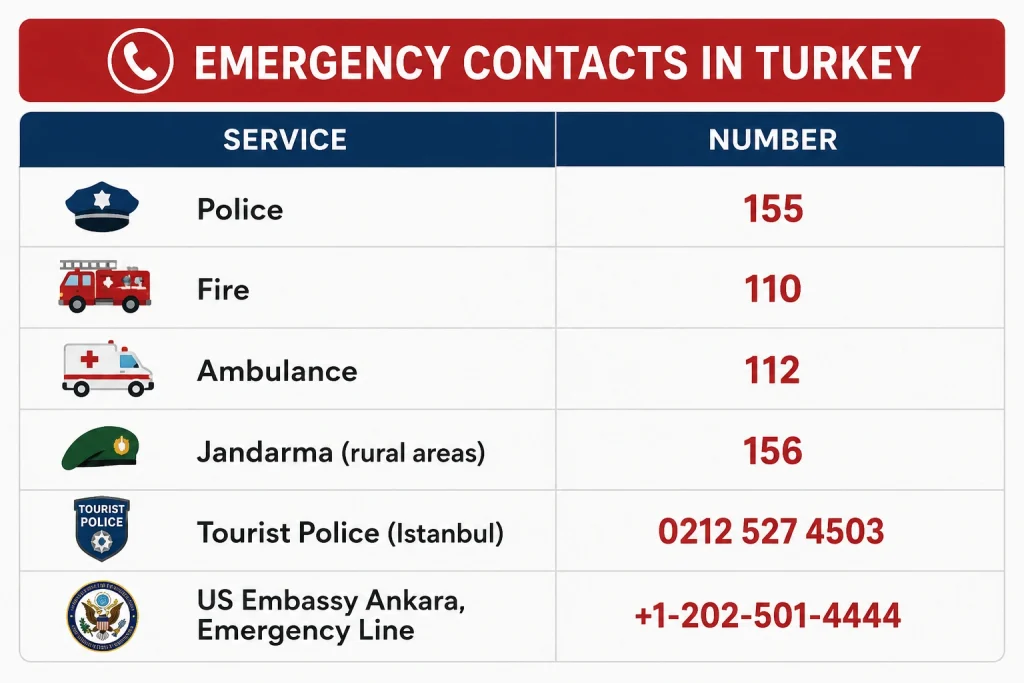
Saving these numbers in your phone before you land takes thirty seconds and is genuinely worth doing.
Frequently Asked Questions
Is Cappadocia safe to visit right now in 2026? Yes. Cappadocia continues operating normally, with no local disruption from the more distant border regions covered under Turkey’s Level 4 advisory zones.
Is Cappadocia safe for families with children? Yes, it’s a genuinely good family destination, with hands on activities, spacious cave hotels, and low overall risk. Just check age minimums for balloon rides in advance.
Is Cappadocia safe for American travelers? Yes. There’s no elevated risk tied specifically to US nationality, and registering with the STEP program before your trip is a sensible precaution rather than a necessity.
Is Cappadocia safe from terrorism? Cappadocia has not been a target for terrorism related incidents, and it sits well outside the border regions where Turkey’s advisories flag elevated risk.
Is a layover in Turkey safe? Yes, layovers through Istanbul’s airports are routine and safe, with no connection to the security situation in Turkey’s southeastern provinces.
Is Göreme specifically safe? Yes, Göreme is arguably the safest and most tourist friendly town in the entire region, with most of daily life built around hosting visitors comfortably.
Is Cappadocia safe at night? Yes. The towns are small and quiet after dark, and walking back to your hotel from dinner is normal and low risk.
Is tap water safe to drink in Cappadocia? It’s generally treated and safe, though many travelers prefer bottled water simply for taste. Either option is easy to find.
Is it safe to travel to Cappadocia after the 2023 earthquake? Yes. Cappadocia sits outside the zone most affected by the 2023 earthquakes, and there’s been no lasting disruption to tourism infrastructure in the region.
Is renting a car safe in Cappadocia? Yes, roads are well maintained and traffic is light. It’s a comfortable option for exploring at your own pace, particularly for day trips beyond the main towns.
Final Verdict: So, Is Cappadocia Safe?
Yes, clearly and consistently so. The two concerns most travelers arrive with, balloon safety and regional conflict, both hold up well under real scrutiny. Balloon flights carry a well documented, sub 0.01% incident rate. The border regions covered under elevated advisories sit hundreds of kilometers away and have no bearing on daily life in Nevşehir province. What’s actually worth your attention is far more mundane: staying hydrated on summer hikes, booking tours through reputable operators, and keeping half an eye on your belongings in crowded spots, the same common sense that serves you well anywhere in the world.