
Cappadocia’s Instagram fame has turned a surreal landscape into a logistics puzzle. The balloon-filled skies and fairy chimney sunrises promise effortless magic, but behind every perfect shot is a traveler who woke up at 4:30 AM only to find their flight cancelled. Again.
Roughly 30% to 40% of all scheduled balloon flights in Cappadocia are grounded on any given day due to wind, but the feeds never show the scramble to rebook or the sinking feeling of a wasted morning. You don’t need another gallery of hot air balloons. You need a plan that survives the reality of no-fly days and scattered trailheads.
Key Takeaways
- Pick your base town before anything else: Göreme for walkable convenience, Uçhisar for quiet panoramas. The wrong choice means paying taxis to reach every trailhead.
- Book your balloon for your first available morning with a backup morning immediately after; 30% to 40% of flights cancel for wind, and same-day rebooking is nearly impossible in peak season.
- Rent a car for at least one day to reach the car-required sites (Sobesos, Keslik Monastery, Özkonak) that tour buses skip.
- Eat in Nevşehir city center lokantas, not Göreme’s main strip: same dishes at roughly half the price.
- Download Maps.me and WhatsApp before you land; cellular signal dies in the gorges and every hotel uses WhatsApp for transfers.
This guide is the antidote to the Instagram logistics haze. It’s opinionated, price-transparent, and built on multiple seasons of on-the-ground trial and error, the kind where you learn the hard way that a “cave hotel” can mean a basement with a damp smell and no window. I’ve made the mistakes so you don’t have to.
Every recommendation is specific: exact prices, which valleys to hike in which order, and the red flags that separate a genuine experience from a tourist trap. Balloon flights cost anywhere from €150 to €450 per person, but most first-timers budget only for the ticket, ignoring the high probability that a no-fly day will wipe out their sunrise. A backup morning is not optional.
📌 Important Pricing Notice: Ticket prices, museum fees, and balloon flight rates are subject to seasonal adjustments by local operators and heritage authorities. We highly recommend checking the official booking platforms or live affiliate widgets at the exact time of your travel to lock in current rates.
Alex’s Travel Journal: During my very first morning in the region in October 2023, the wind limits spiked to 14 knots at dawn, grounding every single basket. Because I hadn’t booked a strategic backup morning in advance, I spent the next three hours frantically messaging local operators via WhatsApp only to find out everything was completely oversold for days. It was a brutal lesson in Cappadocia logistics.
The article’s structure mirrors the decisions you actually face: pick a base town first, then lock in your balloon strategy, then sequence the valleys to avoid backtracking. No filler, no generic “top 10” lists. Before you book a single night, you need to pick a base town. The wrong choice costs you in taxi fares and wasted mornings.
Where to Stay: Choosing Your Base Town
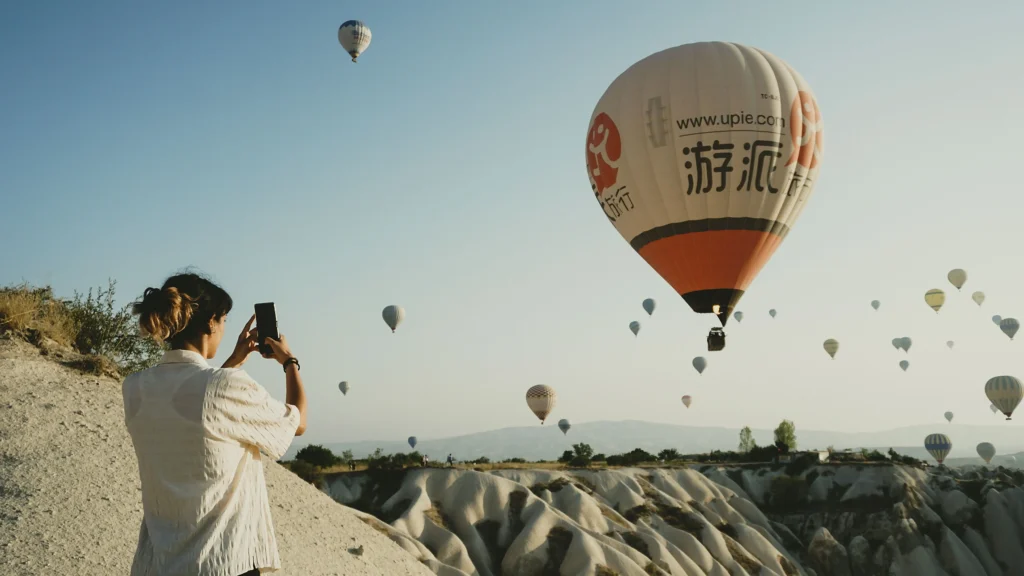
Before you book a single night, you need to pick a base town. The wrong choice costs you in taxi fares and wasted mornings. Cappadocia’s towns are scattered across a high plateau, connected by roads that wind through valleys, not by pleasant pedestrian paths. You cannot stroll from Göreme to Ürgüp on a whim. Where you sleep determines how many dolmuş transfers you juggle and how early you wake for balloon chases. It also decides whether your evening ends with a glass of wine on a quiet terrace or with a honking tour bus outside your window.
Why Your Base Town Dictates Your Entire Trip
Cappadocia is not a compact old city where you can pivot your plans on a five-minute walk. The four main towns sit kilometers apart, and the inter-town infrastructure for walkers is nearly nonexistent. You’ll rely on dolmuşes or taxis for most connections. If you pick a base that’s far from the valleys you want to hike, you’ll burn an hour each morning just getting to a trailhead. If you pick a base with no evening atmosphere, you’ll be stuck in your room by 9 p.m. The choice isn’t just about comfort; it’s about how many actual hours you spend exploring versus staring at a road.
Göreme’s central location, right in the middle of the main valley network, makes it the most sensible hub for transport. But that convenience comes with trade-offs you’ll feel immediately.
The Four Main Bases: A Head-to-Head Comparison
The table below lays out the core trade-offs. Scan it with your own priorities in mind: if you want to roll out of bed and onto a hiking trail, walkability matters. If you’re here for the balloon photos, proximity to launch sites or panoramic viewpoints changes your mornings. If you’re a light sleeper, noise level is non-negotiable.
| Town/Area | Best For | Vibe & Noise Level | Balloon Proximity | Walkability | Typical Price Range (2026 Index) |
| Göreme | First-timers, tour access | Lively, backpacker-heavy, noisy at night | Very high, balloons launch nearby | Excellent, trails start from town | Budget to Mid-range (€45–€120/night) |
| Uçhisar | Quiet luxury, balloon views | Calm, upscale, almost silent after dark | High, panoramic views from castle hill | Moderate, steep streets, car needed | Mid-range to Luxury (€130–€350+/night) |
| Ürgüp | Wine lovers, slow travelers | Local, relaxed, quiet evenings | Moderate, further from launch sites | Good within town, poor to trailheads | Mid-range (€70–€160/night) |
| Ortahisar | Budget, authentic local life | Rustic, very quiet, few tourists | Moderate, views from the fortress | Hilly, limited sidewalks | Budget (€30–€65/night) |
Göreme puts you in the middle of everything, but that also means you’re in the middle of the noise. Uçhisar trades that buzz for elevation and silence. You’ll watch balloons drift past your window, but you won’t walk to a restaurant. Ürgüp’s wine houses and slower rhythms suit a return visit, not a first trip where you’re trying to cover ground. Ortahisar is the budget wildcard, but its steep lanes and limited public transport make it a poor base unless you have a rental car.
Red Flags When Booking a “Cave Hotel”
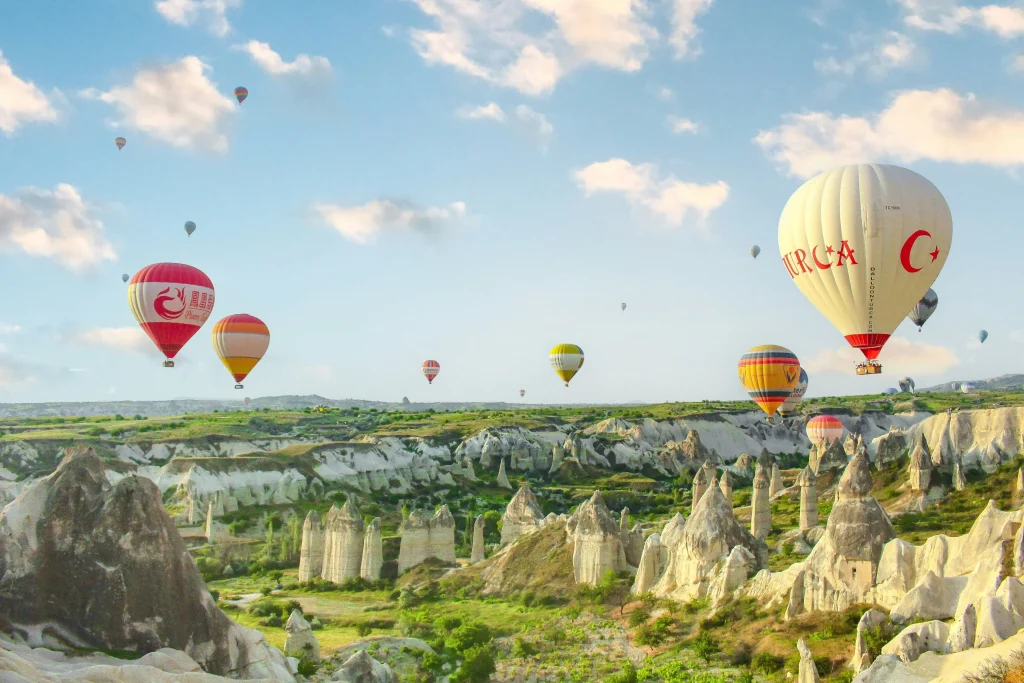
Cappadocia’s cave hotels are the main event, and the marketing is relentless. Not every room carved into the hillside is a genuine cave. Some are concrete shells with a thin tuff veneer, and a few are outright basements with no natural light. The worst offenders leave you sleeping in a damp, windowless box. That’s the opposite of the cozy, ancient retreat you booked.
Alex’s Real-World Warning: I once booked a highly rated “luxury cave room” near Göreme’s lower strip that turned out to be nothing more than a poorly excavated basement with zero natural light or ventilation. By the next morning, the high humidity left all my camera gear and clothes smelling heavily of mildew.
Look for these warning signs in photos and descriptions: no window visible, no mention of bathroom ventilation, no heating source listed. A true cave room stays around 18°C to 20°C year-round, but that’s only comfortable if the air moves. Without ventilation, condensation builds, and the room feels clammy. If the listing boasts “modern construction” or shows smooth, painted walls without the natural tool marks of excavated tuff, you’re looking at a concrete replica.
How to Verify Real Cave Architecture vs. Basement Marketing
Before you hand over your credit card, ask the hotel two direct questions: Is the room excavated from natural tuff, or is it built into a concrete shell? and Is there a window that opens? A genuine cave room will have uneven walls, visible chisel marks, and a cool, stable temperature you can feel the moment you step inside. The thermal reality of 18°C to 20°C interiors means you’ll want a heating option for chilly spring and autumn nights: a radiator or underfloor system, not just a portable plug-in unit.
Hot Air Balloons: The Complete Booking & Safety Guide
Base town sorted. Now the thing you are actually anxious about: the balloon. Not the Instagram framing, not the wicker basket. The logistics. You have probably read that flights cancel constantly and that prices swing wildly. Both are true. What most guides skip is the booking sequence that turns those truths into a manageable plan instead of a panic spiral.
When to Reserve (And Why Your First Morning Is Non-Negotiable)
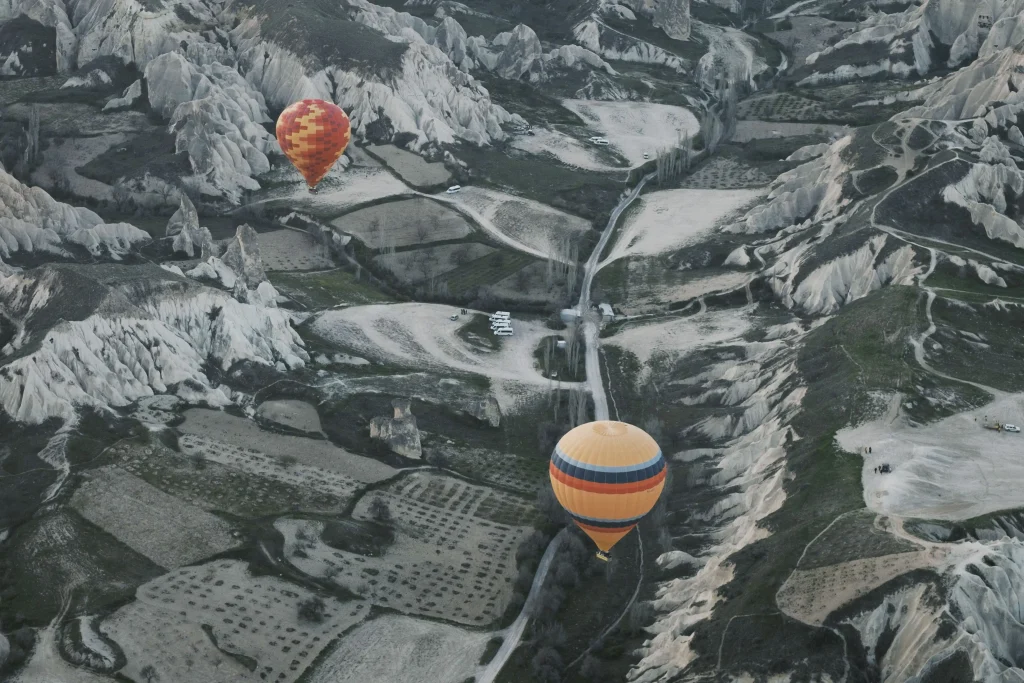
Cappadocia’s high-plateau dawn winds are the silent dictator of your balloon plans. Surface winds above 10 to 12 knots make safe inflation impossible, and the chief pilot, not a company manager, makes the final no-go call with zero commercial override. That call happens roughly two mornings out of every five. In spring the cancellation rate sits around 20% to 25%, and autumn is the calmest at 15% to 20%, but the raw number still means you need a backup morning locked in before you even land in Turkey.
Peak season prices for the 2026 track hover around €250 to €260 per person for a premium standard flight, but they spike sharply after a cancellation because demand compresses. If you wait to book on arrival, you will pay a steep premium for whichever operator still has a seat, often the one with the oldest fleet and the loosest safety culture. Reserve your first possible morning the moment your flight dates are fixed, and book a separate backup slot with a different operator for the next day or two. Do not assume the same company can rebook you; after a no-fly day, every available basket fills within hours.
The Cancellation Cascade Impact: On my second autumn scouting trip, a sudden weather ground-out on Monday displaced over 2,000 passengers into Tuesday’s pool. Because Tuesday was already fully booked, travelers who didn’t plan a multi-day backup strategy were left completely stranded on the ground for their entire vacation.
Vetting Operators: Safety Beyond the Photo Op
Price alone is a terrible safety filter. A €150 flight is not inherently dangerous, and a €450 one is not automatically safer. What matters is whether the operator runs a modern fleet, carries full passenger insurance, and, most critically, employs pilots who hold a valid Turkish Civil Aviation Authority (SHGM) balloon pilot license. The SHGM requires minimum 5 km visibility for VFR operations, and no commercial pressure can override the chief pilot’s go/no-go decision. Ask before you pay: “Who is your chief pilot, and how many Cappadocia-season hours does she or he have?” If the answer is vague, walk.
Booking Advice
Use platforms like GetYourGuide or Viator only to benchmark baseline seasonal prices, then book directly with local operators to avoid high reseller markups and ensure immediate, clear weather-cancellation refunds.
Direct contact also lets you verify insurance coverage. A reputable operator will state plainly that weather cancellations are fully refunded with no service-fee deductions. Reseller platforms often bury that promise in fine print or issue credits instead of cash. You are not buying a concert ticket; you are buying a safety-critical flight. Book direct.
Cancellation Protocols and Your Backup Morning Strategy
The cancellation cascade is the real villain. A Monday no-fly day pushes every displaced passenger into Tuesday’s baskets. By Sunday afternoon, Tuesday is oversold, and operators start bumping new bookings. If you booked through a reseller, you may not even know you have been bumped until the 4 AM pickup fails to arrive.
Direct bookings with operators that offer free rescheduling or a full refund for weather cancellations give you a clear line of communication: you will get a WhatsApp message the night before or at pickup time, and you can rebook on the spot. The only defense is to have a backup morning already reserved. That way, if Monday cancels, you are not scrambling against Tuesday’s compressed demand, you are simply confirming your Tuesday slot. Direct booking is the only way to guarantee a full weather refund, because operators are legally required to refund weather cancellations in full, but resellers sometimes pocket a processing fee that the operator never sees.
Real Price Ranges and Hidden Costs
Shared flights run from roughly €150 to €450 per person for the current season. The lower end usually means a larger basket (20–28 people) and an older burner system; the upper end buys a smaller basket (12–16 people) and a newer fleet. Private charters start above €2,000 and only make sense if you need a completely tailored flight path or are filming. Peak season pushes shared prices toward the €250 to €260 range, and after a cancellation those numbers jump higher.
Beyond the ticket, budget for a few hidden costs. Hotel transfer is usually included but confirm it: some operators charge an extra €5 to €10 if your base town is Uçhisar or Ortahisar rather than Göreme. Post-flight tipping is not mandatory but expected; 100 to 200 Turkish lira per person (or €5 to €10) in the pilot’s tip envelope is standard. Insurance add-ons are rare with reputable operators because the flight price already covers passenger liability, but if a company offers “supplemental flight insurance” for around €15 to €20, treat it as a red flag—it often signals gaps in their core coverage.
Ground-Based Sunrise Alternatives for Non-Flyers
Not everyone wants to fly. Some travelers are anxious about heights, some cannot stomach the price, and others object to the environmental impact of mass balloon tourism, hundreds of burners firing at dawn over a fragile landscape. Cappadocia’s sunrise is not exclusive to a basket. You can watch the balloons rise from a valley rim, a rooftop, or a trailhead and still get the iconic view without the ticket.
But what if you skip the balloon entirely, by choice or by wind? Here is exactly what to do instead.
Cappadocia Without a Balloon: The Sunrise Decision Tree
A no-fly morning doesn’t mean a wasted sunrise. It means you trade a basket for empty trails, better light, and a story that isn’t a carbon copy of everyone else’s Instagram.
Your Four Best Options
- Option 1: Guided Hike to Kızılçukur
- Best for: Mobile hikers with moderate fitness who want solitude.
- Logistics: Leave your base town 45 minutes before sunrise. That’s non-negotiable. The trailhead sits just off the road near the Kızılçukur Valley viewpoint, poorly signed and easy to miss in the dark. A local guide solves both the navigation and the access problem: many paths cross private farmland, and a guide knows which gates are open. You’ll walk into the valley as the first light hits the tuff, the fairy chimneys glowing pink while the balloons drift above in the distance. No crowds, no drone buzz. Just you and the sound of your own footsteps on soft volcanic sand. If you’re staying in Göreme, a guide can pick you up; budget around 30 to 40 USD per person for a small-group sunrise hike.
- Option 2: Private Horseback Through Rose Valley
- Best for: Travelers seeking a quieter golden-hour experience without heavy dust clouds.
- Logistics: This is the move you make when you want motion but not the noise. A private horseback ride through Rose Valley at dawn puts you on narrow trails where ATVs can’t go, surrounded by silence instead of engine roar. The light hits the rose-colored rock exactly right, and you’re not choking on a dust plume kicked up by a convoy of quad bikes. Yes, the ATV sunset tours are cheaper and easier to book, but they turn the valley into a motorway. A private ride costs around 60 to 80 USD per person but gives you two hours of actual peace and far better photos. Book through a stable that starts before sunrise, not one that runs the standard 9 AM tourist loop.
- Option 3: Panoramic Ridge Above Göreme
- Best for: Photographers with a 70–200mm lens who want balloons in frame without being in one.
- Logistics: Skip the hotel terrace. Walk up the dirt track behind the Göreme Open Air Museum, past the last souvenir stand, and keep climbing until the town drops away. The ridge runs parallel to the flight path, giving you an unobstructed panorama of balloons rising against the Uçhisar Castle silhouette. Bring a 70–200mm lens; you’ll need the compression to pull the balloons close to the fairy chimneys. A tripod helps in the low light but isn’t essential if you brace against a rock. Arrive 30 minutes before sunrise to claim a spot and set your white balance. This is the view balloon pilots see, and it costs nothing.
Alex’s Field Notes for Photographers: I tested this ridge line extensively using a standard 70-200mm setup. The absolute sweet spot for framing is at 135mm. This focal length perfectly compresses the distance, making the rising balloons fill the negative space right behind Uçhisar Castle.
- Option 4: Rooftop Breakfast with Balloon Backdrop
- Best for: Low-mobility travelers or those prioritizing comfort.
- Logistics: Not every terrace delivers. Many hotels market a “balloon view” that turns out to be a distant speck behind a power line. Legitimate sightlines require a clear, raised view toward the flight corridor north and east of Göreme. Look for terraces in Uçhisar or on the upper edges of Göreme that have unobstructed sightlines to the horizon, not just a peek between buildings. A few properties in Ortahisar also work, but you’ll need to verify the angle. Ask the hotel for a raw, unedited photo from their terrace at dawn, not a marketing shot. The real ones show balloons in the middle distance, not cropped and zoomed to fantasy. A rooftop breakfast here runs around 15 to 25 USD, and you can watch the entire launch sequence without leaving your chair.
How to Choose Based on Mobility, Budget, and Timing
Start with three questions. Do you have a car? Are you comfortable on uneven terrain? Is your budget under 50 USD? If you have a car and want total control, drive yourself to the ridge above Göreme (Option 3). No car? Then factor in a taxi or guide.
If you’re mobile and want solitude, the guided hike to Kızılçukur (Option 1) fits a tight budget and gives you the most immersive experience. If you can stretch your budget and prefer a smoother ride, the private horseback trip (Option 2) wins on atmosphere. If mobility is a concern or you simply want to sit with a coffee and let the show come to you, the rooftop breakfast (Option 4) is the only choice that requires zero physical effort.
The One Rule That Overrides Everything: Be in position before the sun crests the horizon. Cappadocia’s light is best in the first 20 minutes; after that, the magic fades and the tour buses arrive.
Day-by-Day Itineraries: 2, 3, and 5 Days
The most common itinerary mistake is treating Cappadocia like a checklist you can sweep in any order. You can’t. The distances between sites are deceptive, and the midday tour-bus surge will eat your time if you let it.
Every itinerary below assumes you base in Göreme. It sits almost squarely in the middle of the region and has the best dolmuş connections, so you’ll spend your mornings hiking, not commuting. Uçhisar and Ortahisar are lovely, but they add 20 to 30 minutes of transit to every major trailhead and museum: a tax you don’t need on a short trip.
The 48-Hour Essential Sprint
- Morning One: Morning one is your balloon or ground sunrise. If you’re flying, you’ll be back by 7:30 AM. If you’re on the ground, catch the first light from the rim of Rose Valley. Either way, be at the Göreme Open Air Museum by 8:00 AM sharp. General entrance admission starts around €20. The frescoes in the Dark Church are genuinely worth the extra €6 ticket add-on, and at that hour you’ll have them almost to yourself. By 10:30 the tour buses roll in and the site turns into a slow-moving queue.
- Afternoon One: Afternoon one is a single hike: the Red Valley loop. Start from the trailhead near Ortahisar, walk through the pink and red tuff corridors, and finish at the sunset viewpoint above Çavuşin. You’ll be back in Göreme by early evening with time to find a lokanta and reset.
- Morning Two: Morning two, take the dolmuş to either Derinkuyu or Kaymaklı underground city (entry for either starts around €13). Derinkuyu is deeper and more impressive, but Kaymaklı is easier to reach and still gives you that claustrophobic, multi-level maze. Go early; the tunnels get stuffy by noon.
- Afternoon Two: Afternoon two is your choice: a pottery stop in Avanos (the family workshops on the river side are less touristy) or the Uçhisar Castle viewpoint (entry starts around €9) for sunset. Both are quick dolmuş rides from Göreme.
The 3-Day Balanced Loop (Red & Green Tour Highlights)
You don’t need two organized tours. The standard Red and Green circuits are just geography, not secrets, and you can cover their highlights independently for half the price if you rent a car for exactly one day.
That one day is your southern push: Derinkuyu or Kaymaklı (€13), the Ihlara Valley (€15), and the Seljuk-era ruins at Sobesos. Start early, drive straight to the underground city, then hike a 4-kilometer stretch of Ihlara’s canyon floor before the midday heat hits the rock walls. Have a simple lunch at a riverside café, visit Sobesos on the way back, and return the car before dinner. Everything else (Göreme Open Air Museum, the Red or Rose Valley hikes, Avanos, Uçhisar) is reachable by dolmuş or on foot.
Alex’s Transit Warning: On my second trip, I tried to pack a trek through the full length of Ihlara Canyon and a sunset sprint up to Uçhisar Castle into a single afternoon. I spent two solid hours trapped behind regional tour buses on single-lane roads, missing the golden hour completely. Cluster your geography or pay the price.
Evenings on a three-day trip are for viewpoints and local dining. Sunset at Uçhisar Castle or the less crowded Ortahisar Castle gives you a panoramic finish without the rushed itinerary. You’ll have covered the circuit, but on your own clock.
The Slow Traveler’s 5- to 7-Day Immersion
A five- to seven-day trip is a license to ignore the standard circuit entirely. You’ve seen the balloon photos. Now go where the Instagram geotags don’t reach. Base yourself in a village homestay or a quieter Uçhisar property and spend your mornings hiking valleys like Pancarlık and Bozdağ, where you’ll encounter more tortoises than selfie sticks. The trails are unsigned, the tuff formations wilder, and you’ll have the place to yourself until late morning.
Devote a full day to Avanos. Not the quick pottery demo: sit with a master artisan for an afternoon, learn to throw a pot properly, and walk the backstreets where families have worked the same clay for generations. Another day, head to Ayvalı for a home-cooking class. You’ll spend hours in a village kitchen learning dishes that never appear on restaurant menus. This is Cappadocia at walking speed, and it’s the version you’ll remember.
Mapping Distances to Eliminate Backtracking
Day-by-day lists fail because they ignore the 40-minute drive between Ihlara Valley and Ürgüp. That’s the trap: you see “Ihlara” and “Ürgüp” on the same day plan and assume they’re close. They’re not. Logical geographic clustering saves you hours.
Group northern sites (Avanos, Ortahisar, Uçhisar, and the Red/Rose valleys) together. The southern cluster (Derinkuyu, Kaymaklı, Ihlara, Sobesos) demands its own day with a car.
Approximate drive times from Göreme: Derinkuyu around 35 minutes, Ihlara around 55 minutes, Sobesos about 1 hour 10 minutes; Avanos around 15 minutes, Uçhisar around 10 minutes. Use dolmuş for the northern loop, a rental car for the southern one, and you’ll never back-track.
Valleys, Churches & Underground Cities: A Field Guide
The landscape here doesn’t just sit pretty for Instagram. It’s a dense, dusty, and occasionally claustrophobic maze of erosion-carved gullies, frescoed sanctuaries, and multi-level cities that force you to duck your head and watch your step. Knowing which site rewards an early start, where the light does its best work, and when a rental car becomes the smartest investment is what turns a chaotic checklist into a trip that actually breathes.
Göreme Open Air Museum: Timing and Etiquette
The main €20 ticket gets you into the courtyard chapels, but the tour groups move through in waves. The real payoff is the Dark Church. Its separate €6 entry fee filters out the rush. Inside, 11th-century frescoes cover the walls in a density and color saturation that feels almost aggressive: scenes from the life of Christ, the saints, the donors. These have never been retouched. The light is best before 10 AM, when the low sun angles through the small windows and hits the gold leaf without glare. After that, the interior dims and your camera will struggle.
Dress code is simple: shoulders and knees covered. This isn’t a mosque, so no headscarf is required, but the site is still a consecrated space. The guardians will turn you away if you’re in a tank top and shorts. The rule exists less for modesty and more because these are fragile, active conservation zones. Bare skin oils damage the frescoes over time.
The Underground Cities: Managing the Depths
Derinkuyu, Kaymaklı, and Özkonak share the same engineering logic: ancient peoples carved down into soft tuff, hardening it on contact with air to create ventilation shafts, stables, churches, and living quarters that descend for meters. Derinkuyu reaches 60 meters, with steep, narrow staircases that twist without warning. The ceiling drops low enough that you’ll walk hunched for long stretches. Claustrophobia hits hard here, and even people who don’t normally have it report a tightening chest.
Kaymaklı is shallower but still disorienting. Özkonak, with its smaller chambers and oil-press rooms, sees a fraction of the traffic and gives you space to actually pause. Crowds patterns are predictable. Derinkuyu fills by 10 AM with tour buses from Göreme. Özkonak, farther north, stays quiet even at midday. The ventilation shafts that kept these cities livable now funnel sound: a school group three levels below sounds like it’s right behind you. Wear sturdy shoes. The stone is polished slick from centuries of feet.
Red Valley, Rose Valley, and Love Valley: Hiking Notes
Red Valley earns its name at sunset. The iron oxide in the rock turns the ridges a deep, burnt crimson between 5 and 6 PM in October. By 4:30 PM, the best viewpoint fills with tripods and selfie sticks. Arrive early, claim a ridge spot, and wait for the light to do its work. Midday sun flattens the color to a dusty pink. Fine for a walk, useless for photography.
Trail difficulty varies. Red and Rose Valley loops are moderate, with loose scree and occasional scrambles. Love Valley’s main path is easier but crowded enough to feel like a queue. Signage is sparse and often wrong. Carry at least two liters of water per person. There is zero shade on the plateau rim, and the sun reflects off the pale tuff. Sun exposure here is not a suggestion; it’s a dehydration risk you will feel within an hour.
Pancarlık, Bozdağ, and Forgotten Trails for Slow Travelers
When Love Valley feels like a queue, head to Pancarlık or the Bozdağ massif. These trails see a handful of hikers per week. The rock-cut churches here are smaller, often unlocked, and the silence is total. Navigation is the catch. Trail markers vanish at junctions. Cellular signal vanishes inside the valleys. Offline maps are non-negotiable. A paper map helps, but GPS with pre-loaded tiles is what gets you back to the road before dark. These are not trails for a casual sunset stroll. They demand a headlamp, extra water, and the willingness to backtrack when a gully dead-ends. The reward is a Cappadocia that feels like it belongs to you alone.
Sobesos and Keslik Monastery: The Car-Required Stops
Sobesos is a late Roman-early Byzantine settlement with intact floor mosaics: geometric patterns and vine scrolls that have never been moved. Keslik Monastery hides behind a nondescript entrance and opens into a complex of refectory halls and a chapel with frescoes that still carry the soot of centuries. Neither is reachable by dolmuş. The standard Green Tour skips them entirely.
Road conditions are mixed: asphalt to Sobesos, a short dirt track to Keslik that a standard sedan handles fine in dry weather. A rental car for the day is the best way to tackle these independently. You also gain the freedom to stop at a roadside lokanta where the menu is only in Turkish and the lentil soup costs pocket change.
Geo-Architectural Context: What the Volcanic Tuff Actually Means
The fairy chimneys, the cave dwellings, the underground cities: all of it comes from tuff. This volcanic ash, compacted over millions of years, is soft enough to carve with a spoon but hardens on contact with air. Erosion did the heavy lifting, sculpting pillars and cones where a harder basalt cap protected the layer beneath. Where the cap fell, the tower collapsed. That’s why some valleys are dense with chimneys and others are piles of rubble.
For the traveler, the geology dictates everything. Hikeable valleys follow the softer tuff layers; unstable caves are those where water seepage has re-softened the stone. The underground cities exploited the same property: carve a room, let the air set it, and you have a shelter that lasts millennia.
FAQs
What is the balloon cancellation rate in Cappadocia?
Roughly 30-40% of scheduled flights are grounded on any given day due to wind. Spring sees 20-25% cancellations, autumn 15-20%, and winter up to 40%.
Which town should I stay in Cappadocia?
Göreme for walkable convenience and tour access, Uçhisar for quiet luxury and balloon views, Ürgüp for wine lovers, and Ortahisar for budget but only with a rental car.
How can I avoid tourist trap restaurants in Cappadocia?
Skip Göreme’s main strip. Take a 15-minute dolmuş to Nevşehir city center for family-run lokantas serving testi kebab and mantı at roughly half the price.
Is it worth renting a car in Cappadocia?
Rent a car for one day to reach southern sites like Sobesos, Keslik Monastery, and Özkonak that tour buses skip. Otherwise, use dolmuşes for northern routes.
How can I see the balloons without flying?
Hike to Kızılcukur Valley at sunrise, take a private horseback ride through Rose Valley, photograph from the ridge above Göreme with a 70-200mm lens, or book a rooftop breakfast with a clear balloon view.